.png)
Women at Decision-Making Tables – A Necessity on the Path to Eradicating Crime
- Hanan Elsanee'
- 29 يناير
- 3 دقيقة قراءة
By: Attorney Hanan Al-Sanea
We were moved this week by the image of the signing ceremony of a joint list of all the Arab parties. Indeed, it contained a great deal of hope – the recognition of rampant crime as an existential threat that requires political responsibility and unity of forces. Yet alongside this hope, a strong sense of disappointment also arose, due to the complete absence of women from the event. And this is a recurring pattern – the Peace Council, the Peace Conference in Sharm el-Sheikh, the recent meeting of the High Follow-Up Committee for Arab Citizens in the Negev held in Rahat – repeated images of national and public decision-making tables dominated almost entirely by men. What is troubling here goes far beyond the numerical question of women’s representation – it exposes a much deeper problem: a failure to understand the vital importance of women’s voices on the path to genuinely addressing crime.
Crime in Arab society is the product of a prolonged socio-economic failure: an eroded education system, poverty, a housing crisis, youth without horizons, domestic violence, and a loss of trust in institutions. In the face of this reality stand women who deeply understand the entire life cycle. Women understand security in existential and everyday terms: the necessity of a stable roof over one’s head, a home not threatened with demolition, the ability to pay rent, electricity and water, access to welfare and health services, and the understanding that security also means food security and the ability to support a family in a suffocating economic reality. They understand children’s needs in education and employment, the tools required to prevent dropout, and how to create a future that is not built on violence and crime. Their absence from crime-fighting processes and decision-making leads to policies based on force and enforcement alone, while ignoring the direct link between crime and poverty, domestic violence, housing distress, school dropout, and the lack of horizons for young people. Women who live this reality daily in the home and in the community know how to bring the right preventive solutions – not just police patrols.
Arab women in Israel carry on their shoulders the management of daily life under conditions of violence and exclusion: they are part of a national minority that suffers discrimination in the economy, employment, housing, education, and politics, alongside structural gender inequality in both Arab and Israeli patriarchal societies. This combination of barriers dramatically reduces the chances of Arab women being represented in the political, national, and local arenas, and the data in this regard point to a deep structural failure. But their absence from decision-making tables is the central failure. Without their perspective, there is almost no real connection between personal security, welfare, health, and employment – and in its absence, real and sustainable solutions are not created. On paper, Israel is committed to equal representation of women in decision-making processes (UN Security Council Resolution 1325 from 2000, as reflected in Section 6C1 of the 2005 Women’s Equal Rights Law), with emphasis on including women from minority groups. In practice, policies of exclusion, along with the absence of action plans and binding mechanisms in political parties and in local and central government, prevent Arab women – and women in general – from truly realizing the principles of this resolution.
The solutions women bring are deep solutions of healing, rehabilitation, prevention, and construction – not merely forceful responses. They do not only manage reality and experience it; they possess the tools, knowledge, and capabilities to change it. To address the problem, not only its symptoms. And it is important to say: the lack of women’s representation is not a “women’s problem.” It is a problem of men, of leaderships, and of an entire society that gives up half of its reality and its chance for real change. What the public already sees – politics still refuses to see: a survey by the Israel Democracy Institute shows that 70% of the public supports increasing women’s representation in the Knesset and in the government. In Arab society as well, there is broad support for integrating women into politics, making this a clearly electoral step. Running together is an important step, but women’s representation on the list is an essential one. And today, at a moment of deep crisis in Arab society, we stand at a decisive point: parties that speak about fighting crime, social justice, and security cannot continue to leave women outside the room where decisions are made. A society that does not place women as full partners in its leadership forfeits in advance half of its power, knowledge, and vision. Representation of women is not an aspiration for the future. It is a baseline. This is where we must begin in order to ensure a different future for Arab society.
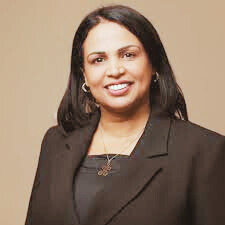
The author is a Bedouin feminist, a human rights attorney, and co-executive director of Itach–Maaki: Women Lawyers for Social Justice.
