.png)
The Arab–Palestinian Woman Is the Wide Embrace Capable of Containing Both Grief and Crime
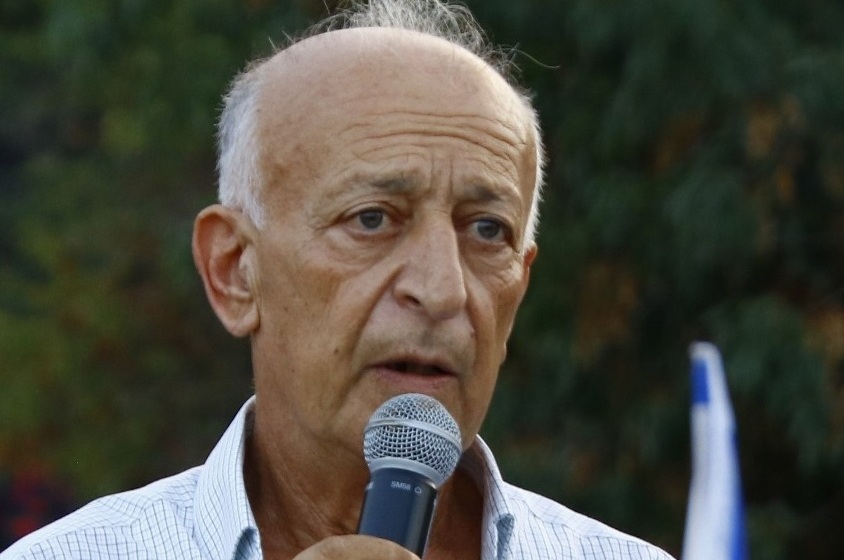
By: Tamim Abu Khait
I recently participated in the opening of an art exhibition by young women artists from the Arab community, on the theme of violence and crime, under the title “Embrace,” held at the Tishreen Association’s cultural club in the city of Tayibe.
The participating artists were: Dima Salah, Areen Kanana, Lian Sharqiya, Linda Taha, Nizam Abu ‘Eisheh, and Yamama Khaldi.
Six artists presented contemporary plastic artworks in an attempt to reconstruct the concept of the embrace in light of the violent reality surrounding us—one that threatens the foundations of personal and social security within the Arab community.
During the opening of the “Embrace” exhibition, the artist Maria Salah Mahameed held an artistic conversation with the participating artists, discussing their works: how the notion of the embrace is embodied in their art, how it begins within us, and how it grows into the ability to hold and contain the embrace of others.
Afterwards, attorney Rida Jaber, journalist Diya Haj Yahya, and Wafa Haj Yahya joined—moderated by Mohammad Fawzi Ighbariya—for a discussion on the question: How can the embrace protect our youth from crime?
And I can say that after a period of artistic and cultural stagnation in the Arab community during the horrific war in Gaza, cultural life has begun to return to its natural course, carrying with it all the consequences of the war: pain, injustice, police violence, and the general repression that the Arab community experienced during this period.
What distinguishes this exhibition is that it features young artists—professional, creative, educated, and academic women. The opening included a powerful expressive dance performance by artist Dima Salah—modern and unusual for the region—suggesting a significant shift not only artistically, but culturally and socially as well, given the circumstances of Arab society.In addition, video excerpts by artist Areen Kanana were shown, presenting scenes from Arab society living under the shadow of crime.
The theme of the exhibition—and the entire discussion—focused primarily on fear, anxiety, and the search for refuge and embrace amid the escalation of violence and crime, and on ways to confront this reality.
A word must also be said in the margins of the exhibition: The Arab community in this so-called “state of equality and democracy” (as Europeans, Saudis, Moroccans, and other free and unfree countries imagine it) does not suffer from a slight shortage of budgets for art, culture, literature, and other cultural activities—but from an almost total absence of such budgets.
Artists, writers, and cultural figures must make do with a few personal donations and with the generosity of certain institutions, municipalities, or associations.
All respect to those who manage to organize such events without a budget, and all respect to those who manage to create art without any support other than the generosity of the audience and those who embrace them.
We are an embrace that holds an embrace, a mother who holds a mother.


