.png)
On Jewish–Arab Partnership in the Next Coalition
- Media Team

- 24 בדצמ׳ 2025
- זמן קריאה 4 דקות
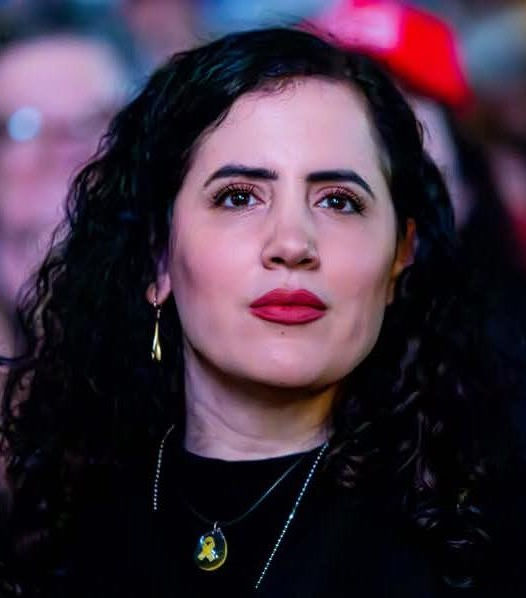
We in the “All Its Citizens” Party uphold the principles of Jewish–Arab partnership and full equality among all citizens of the state. We welcome any position and any call of this kind coming from any political or civic actor in the country that contributes to this struggle. Accordingly, this post by Knesset Member Naama Lazimi, published on her Facebook page, makes a meaningful contribution to this effort.
From the Facebook page of Knesset Member Naama Lazimi: I am following the heated discourse around Jewish–Arab partnership in the next coalition, and I am shocked by the shallowness of the discussion and the lack of substance in general—and especially on our side.
This is not a “strategic” issue; it is a national, social, Israeli issue. How is it possible that almost all of our liberal and political leadership responds straight out of Netanyahu’s most toxic talking-points sheet and fails to break free toward a different vision?
I rarely come out against the leaders of the camp—even when I stood almost alone at demonstrations where bereaved families and families of hostages were beaten, and even when I myself was subjected to police violence. But for heaven’s sake, have some backbone. Stand upright and say yes! Shared life is a value we stand behind. It’s that simple.
Not only should we say that the government of change and the partnership with Ra’am worked—but that it was the political bribery of the opposing bloc, the most corrupt we have known, that dismantled it. Silman and Shikli, the racist opportunists who brought upon us the government of the coup and October 7, were the mistake—not the partnership that began to carry out a basic and necessary correction here.
But the central issue is this: we did not only separate from the leadership of Arab society—some of which I criticize harshly—we separated from Arab society itself. We turned 20% of the population into a “problem” of their parties, not a shared Israeli concern. This is a crying and shameful injustice that has given rise to racist and horrifying phenomena, some of which we have been exposed to only in recent days.
Murder and violence in Arab society are a national issue!This is a matter that must stand at the heart of a vision for changing the reality here.
Today there is not a single Arab citizen whose family or surroundings have not been touched by murder and violence. Citizens are afraid to leave their homes after 7:00 p.m.; children are murdered in playgrounds; a doctor is murdered before his patients’ eyes; explosive devices are planted as if it were nothing—is this sovereignty? Is this governance? This is a state in disintegration. In the government of change, Minister Omer Bar-Lev and his deputy Yoav Segalovitz, together with a ministry director-general who exemplifies public service, Tomer Lotan, led the police and reduced crime by nearly 20% within a year. Criminal organizations knew there was truly someone in charge.
And let’s dive in for a moment: many of the discussions of the Youth Committee that I chair were devoted to Arab society. Why? Because I always try to focus on marginalized communities—those that, if we do not deal with them, no one will see: at-risk youth, people leaving religious communities, single mothers, the LGBTQ+ community, and more. But when I turned to Arab society, I felt that every discussion brought me into a vast world of social gaps and inequality—from underfunding in education per child, to cuts in five-year plans simply because it is possible.
So how does a young man get funneled into criminal organizations? Let’s sketch a trajectory in Arab society—the place where the state has disappeared. First, a world of absent banking services and a flourishing black market, with insufficient policing and systemic neglect. In schools, investment in Arab students is lower, with a widening gap in spoken Hebrew proficiency (and how will he be accepted to a job interview or succeed academically without mastering the language?). Dependence on state budgets because there are no industrial zones and no stable municipal revenues; limited investment in informal education, sports, and culture; and underinvestment in quality employment programs—all alongside the expanding control of criminal organizations over every good parcel of land. From there, the road to crime is short.
That is why security bodies that came to the discussions I held strongly opposed cuts to social services in Arab society—they understand what it means to have an idle young person and where that leads.
After a discussion I held on the state of informal education in Arab society, a young Arab man approached me—a graduate of a youth movement—who told me how it connected him to community volunteering and social action. He said he was deeply moved to come to the Knesset for the first time and speak, and added that he was especially moved that a Jewish Knesset member had initiated the discussion. My heart clenched—why is this exceptional? Why is this not the norm? What happened that we erased an entire society from our story? This is our obligation, not a favor we are doing.
And let’s not forget: exclusion and racism are always—always—uneconomic. Instead of investing and creating growth engines in Arab society that would help rehabilitate the economy and the state, we allow a racist gang that has destroyed every good thing here to keep destroying. I am not willing to fold before this vision of ruin.
The most powerful force against this government is to stand tall and determined above the poison machine, with a reasoned, clear, and proud alternative. We must deal with life itself—our lives, all of ours: Arab society, the north, the Gaza envelope, and every person here. Only a vision of hope and partnership will defeat fascism and extreme nationalism.
Herzl said: “We do not discriminate between person and person. We do not ask what a person’s religion is, or to which race he belongs. He must first and foremost be a human being.”
This is the vision by which we will walk.This is the vision whose light will overcome the darkness.
Naama Lazimi