.png)
The Arab community’s protest in Tel Aviv against crime turns into a massive Arab-Jewish demonstration.
By: Tamim Abu Khait
About 100,000 demonstrators took part in the “Great Black Flags” march against violence and crime in the city of Tel Aviv on Saturday evening, arriving from all parts of the country.
The protest clearly featured the participation of Arab women, Arab youth, and progressive Jewish forces supporting the struggle of Arab society, to the extent that it can be said the demonstration was, in fact, an Arab-Jewish protest.
The march in Tel Aviv began at the cultural plaza near the Tel Aviv Museum, which had served as a focal point for sit-ins and demonstrations by the families of the hostages, and continued to Habima Square—the city’s second cultural center—where the central rally was held with broad public participation, at the height of the protest activities against violence and crime. According to Dr. Jamal Zahalka, Chairman of the High Follow-Up Committee, the number of participants reached approximately 100,000, including more than 70,000 people who were actually present in Habima Square, and thousands more who were unable to reach the site due to traffic congestion and crowding in the area.
The rally was moderated by journalist Shireen Younes, who emphasized unity from north to south and conveyed the protesters’ message calling for an end to the bloodshed and for strengthening the sense of safety in society.
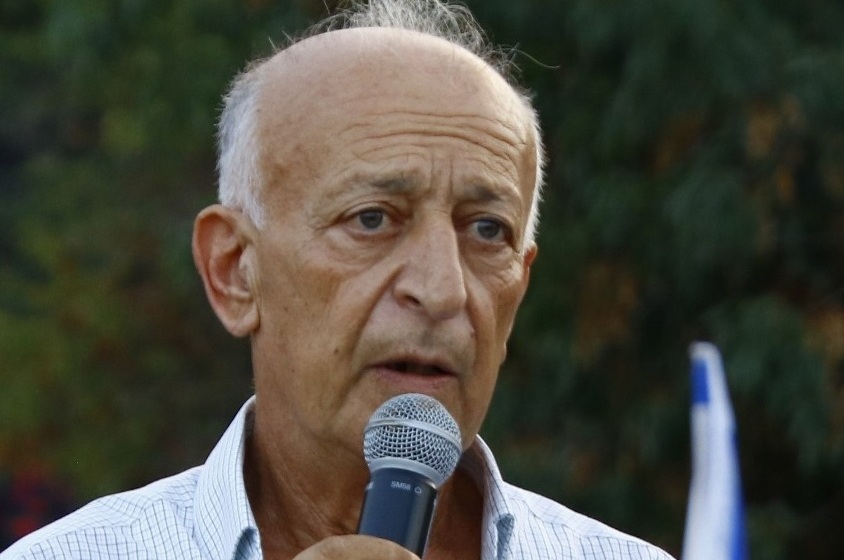
The event saw wide participation from Arab leaders, heads of local authorities, Jewish activists, and representatives of families of victims of violence and crime, who delivered moving speeches expressing deep pain and anger, and renewed their demands for serious and immediate steps to confront the phenomenon of violence and to ensure safety and security for members of the community.
Arab-Jewish Partnership
Dozens of Arab and Jewish movements and associations active in Israel’s public sphere took part in the event, including the “Partnership for Peace” movement, as part of the demonstration organized by the High Follow-Up Committee of the Arab public in Tel Aviv.
Jack Khoury wrote today in Haaretz:
“It was impossible to ignore the prominent presence of citizens from Jewish society. This was not a display of ‘coexistence’ for photo opportunities, but a genuine participation of partners in the struggle. They came to say out loud: violence and neglect are not ‘an Arab problem,’ but a deep failure of the state and of Israeli society as a whole. This was an important reminder that real civic struggle can, and perhaps must, cross identity boundaries.”
A New Peak
This march represents the peak of a broad and growing popular movement that has been ongoing for more than two weeks, including general strikes and demonstrations in several Arab towns. The first spark of protest emerged from the city of Sakhnin, as a clear expression of the accumulated anger over the continuation of crimes and the repeated loss of victims. This was followed by the Sakhnin demonstration and the announcement by the Arab parties of their intention to rebuild the Joint List. Yesterday’s demonstration marked the culmination of this chain of events. All indications point to a significant escalation in the steps taken by Arab society, which could even reach the level of civil disobedience.
The protesters are demanding a serious and genuine plan to combat crime and violence, one that goes beyond slogans and promises and guarantees the basic right of citizens to life and security. Participants emphasized that silence is no longer an option, and that the Arab street has decided to raise its voice loudly in the face of gunfire and chaos, in defense of its dignity and the future of its children.


